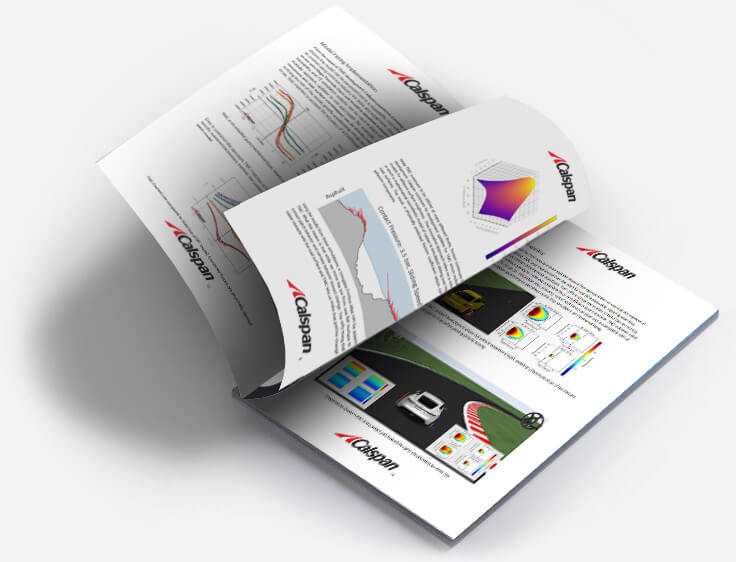
Thermal Mechanical Contact Patch Model white paper

This White Paper Includes Key Information on the Following:
- Why physics-first tire models are becoming essential
Understand the limitations of traditional empirical tire models and why real-time, physics-driven approaches like TMC are critical for modern virtual development workflows.
- How the TMC model is structured and why it matters
A clear breakdown of TMC’s four tightly coupled sub-models — mechanical, contact patch, friction, and thermal — and how they work together to deliver predictive fidelity across operating conditions.
- Contact patch modeling based on real measurements
Learn how TMC derives forces and moments directly from measured or FE-derived contact pressure distributions, enabling accurate prediction of load, slip, camber, pressure, and temperature effects.
- Advanced friction and thermal behavior representation
Insight into TMC’s scalable friction and thermal models, including temperature-dependent friction, surface roughness effects, and transient heat generation that directly influence vehicle balance and handling.
- Real-time performance for simulation and DIL environments
See how TMC achieves real-time execution speeds suitable for driver-in-the-loop simulators, hardware-in-the-loop setups, and full-vehicle simulation platforms without simplifying physics.
- Comparison to Magic Formula and other tire models
A practical comparison showing where TMC matches or exceeds traditional Magic Formula and FTire/CDTire models — especially in combined slip, transient response, and subjective driver feel.
- Model fitting, scalability, and upgrade pathways
How TMC can be parameterized using standard industry testing, updated modularly without full re-fitting, and extended over time as new friction, thermal, or structural models are developed.



Terms and Conditions | Privacy Policy | Copyright Calspan, 2026 © All Rights Reserved